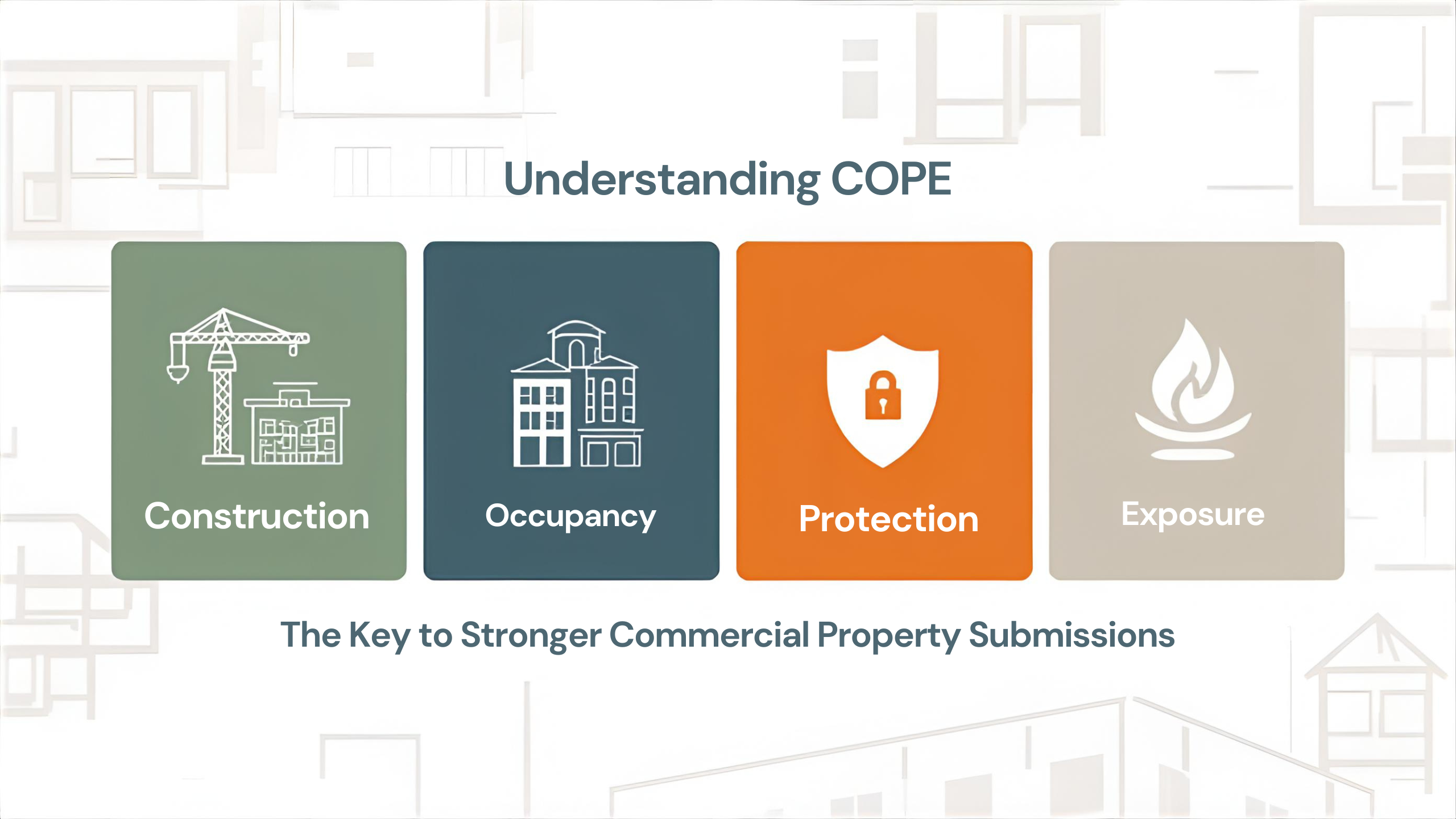
In commercial property insurance, accurate underwriting is critical to ensure appropriate coverage, fair premiums, and effective risk management. One of the most essential underwriting tools is COPE—Construction, Occupancy, Protection, and Exposure. Along with precise building valuations, COPE forms the backbone of property risk assessment, especially in the Excess & Surplus (E&S) insurance market.
What Is COPE?
COPE is the framework underwriters use to understand a commercial property’s risk profile. Each element provides insight into loss potential and insurability:
- Construction evaluates the physical structure and how it responds to fire, natural disasters, and other hazards.
- Building materials (frame, masonry, fire-resistive) and combustibility
- Age of structure and potentially outdated systems
- Size and layout, affecting total vs. partial loss potential
- Occupancy assesses how the building is used and by whom, which directly impacts risk.
- Type of business (e.g., office vs. flammable goods warehouse)
- Operations that affect hazard level, such as chemicals or the use of heating equipment
- Vacancy, which increases vulnerability to damage and vandalism
- Protection reviews systems in place to minimize loss.
- Internal protection: alarms, sprinklers, extinguishers, etc.
- External protection: proximity to fire services, hydrants, water supply
- Exposure assesses external risks that could affect the property.
- Natural hazards: flood, earthquake, wildfire, windstorm zones
- Surrounding risks: neighboring buildings with hazardous operations or materials
COPE and the ACORD 140 Form
COPE details are captured on the ACORD 140 – Property Section. Providing precise, complete information on this form ensures underwriters have what they need to evaluate the risk and quote appropriately. In the E&S space, where nuanced, detailed risk profiles matter, thorough completion of the ACORD 140 helps keep the underwriting process moving and avoids mispriced coverage.
Why is Accurate COPE Information Important?
Underwriters rely on COPE data to assess risk by providing a comprehensive view of a property’s vulnerability and to make informed policy decisions regarding eligibility, coverage limits, deductibles, and premiums. COPE information also supports accurate data collection, as brokers and applicants must gather and present these details to create a complete and credible risk profile for underwriting consideration.
In the E&S market, where risks are often more complex and harder to place, detailed COPE information is even more essential. It enables underwriters to evaluate non-standard risks with precision, tailor coverage terms appropriately, and identify opportunities for risk improvements that may lower premiums. Because of this added complexity, most E&S carriers require thorough COPE data, along with a statement of values (SOV) and loss history, as part of their submission process.
Building Valuations: A Critical Companion to COPE
Accurate building valuations are equally important, as they establish proper replacement cost and coverage limits, help avoid underinsurance and the significant financial gaps it can create after a loss, ensure fair premiums by preventing unnecessary overvaluation, and support efficient claims handling with fewer disputes.
At Arlington/Roe, our team is here to support you every step of the way in navigating COPE requirements and securing the right coverage for your clients. Reach out to your commercial binding underwriter with any questions. We’re committed to helping you write more business, more efficiently.